Category: Uncategorized

  • Ungrateful, Yet Free

    by: Dread Pirate Roberts

    In recent years, expressions of disdain toward the United States have become increasingly common among Americans themselves. These people claim that America is a racist country, one who does not welcome every race, ethnicity, or gender. These are the people who claim that this is the worst country on earth because of how “exclusive” and “racist” the country is. These are the people who complain heavily about how terrible their lives are in this country.

    And yet, these same people refuse to leave.

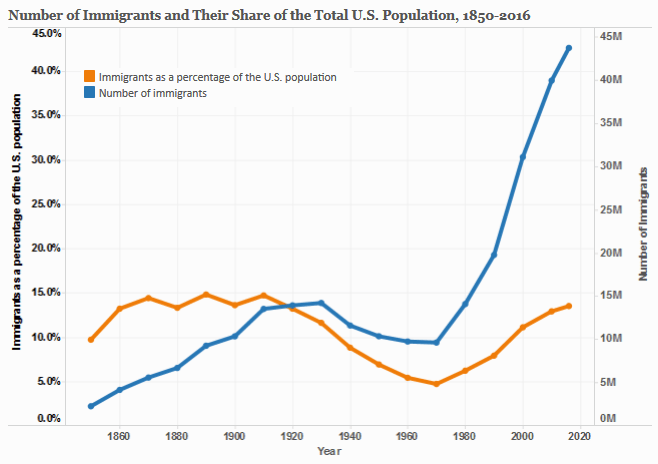
    It’s deeply ironic that so many American-born citizens describe their homeland as unbearable, while millions of immigrants around the world can only dream of coming here every year, drawn in by the amount of great opportunities the U.S. has to offer.

    (Migration Policy Institute)

    Not only do we house legal immigrants, but many illegal immigrants as well who are in search of the same opportunities yet didn’t want to put in the effort of coming to this amazing country legally. Respecting the law isn’t cruelty; it’s what keeps our nation safe, fair, and functional.

    Why would immigrants choose this country instead of any other if it truly is so exclusive and terribly run?

    The answer is simple: they come because it isn’t. Despite its few imperfections, America still represents something extraordinary: the freedom to speak, to work, to believe, and to become something greater than yourself. Millions around the world dream of that chance, and countless have risked their lives to seize it. It’s a dream that only exists because generations before us built and defended it.

    The truth is, there’s no real purpose in resenting a nation that has accomplished so much. It offers world class healthcare (see “Midway healthcare response” and “On the Private Funding of Healthcare”) , remarkable infrastructure, authentic diversity, and, above all, the right to think and speak openly.

    If you can’t listen to other people without becoming outraged by an opinion that differs from yours, maybe don’t live in such a great country. In many places you won’t even have to worry about forming your own opinion, but rather one deemed superior will be forced upon you.

    So yes, you are well within your rights to mindlessly and sheepishly criticize as you please. That’s one of the many beauties of living in a free nation. But don’t forget what this country truly stands for, or how many people wish they could call it home.

  • Midway Healthcare Response

    by Dread Pirate Roberts
    Jan. 16, 2025

    Today, January 16th 2025, The Midway just strategically cornered themselves. How could their writers now possibly make their argument that Lab Liberty’s posts come at some great exterior consequence when, for the past few weeks they have been cooking up this monstrosity of an article which, in many institutions, would necessitate a suspension for the writer.

    First, to address the attack on American healthcare, and then to address the shock value:
    The writer makes the claim that American healthcare is too expensive, and that there is a ”wealth shield” to providing Americans with better coverage. This is misleading and wrong. The reason this claim is misleading is because 1) products in the richer country’s are typically priced higher because time is more valuable. As Gary Becker, famous economist and after whom the University of Chicago named one of it’s most impressive halls, once wrote ”the most fundamental constraint is limited time. Economic and medical progress have greatly increased length of life, but not the physical flow of time itself, which always restricts everyone to twenty-four hours per day.” 2)people in richer countries will spend more 3)the US healthcare system does NOT have high profit margins.

    High spending on health is because more people spend on it, because the country is richer, not because its exorbitantly expensive. The US spends more money on health but not in a way that could not be predicted by its wealth. With a correlation coefficient of 0.944, this is not coincidence.

    On that same note, however, the United States is in no way shape or form an economy with the most expensive healthcare, because while products in modern economies become more expensive, less time is spent to acquire them(hence why the loaf of bread, which would have been priced at a days work previously now costs less than 1/3 of even a minimum wage’s hourly compensation). So, while things may cost more per dollar amount, citizens are getting more value. Here is a graph demonstrating the same relationship between income and spending, demonstrating we properly scale linearly, but keeping mind mind real incomes in the US are much larger than the countries below them:

    The writer claims that bankruptcy occurs most often because of high healthcare costs. You could say the same thing about our relatively high mortality rate, though, because while we have the best healthcare, our people are not as healthy. Gun violence, obesity etc. make the difference.

    To confront the writer’s claims of the wealth shield more directly, possibly the graph that puts this edgy, shocking bourgeois article to shame is the relationship between the profitability of different sectors. *Please note that healthcare is at the very bottom*

    And to finish off my point about this article, and maybe to offer a few pointers on how not to lose the popular vote next time, when you write something like this:

    ”Mr. Mangione’s mother suffered and suffered because she didn’t receive proper care for her condition, and he himself endured years of chronic back pain – and I would bet that had that been my own mother, I would’ve been homicidal, too.”

    Expect alienation from whatever side of politics that is, a shift many of my left leaning friends have felt is best, because posing yourself as a homicidal person isn’t usually compelling.

    A final point:
    Colleges don’t like that either.

  • The Age of the Elephant: A History of Democratic Defeat and Looking Forward

    by Guest: ”Marat”
    Dec. 12, 2024

    Forty years ago, Ronald Reagan won a second term as U.S. President in the 1984 election. The democratic candidate, Walter Mondale, received only 13 electoral votes (having won only his home state of Minnesota and the District of Columbia), while Reagan received 525 – the most electoral votes in American history. It was the greatest presidential victory in American history (bar elections involving the Founding Fathers), with Reagan winning 49 states. Reagan is inarguably the American president with the greatest impact in the past hundred years, challenged only by Franklin D. Roosevelt. Deregulation, tax cuts, Christian politics – the core principles of the GOP that we know today were rooted in Reagan’s ideology. In many ways, we are still living in Reagan’s America.

    This year, we saw Donald Trump win his second term as President in what was predicted to be a scarily close race (with some even predicting a Harris victory). Trump won 80 electoral votes over Harris. A month has passed since the election, and while the fact that Trump has won has become accepted, it was a great shock to many on the night of November 5th and the day after. At this school especially, there were high hopes for a Harris victory.

    The legacy of Reagan in the Republican Party is now fiercely challenged by the power of Trump and the MAGA Movement. Reagan and Trump are both polar opposites and closely related figures in many ways. Both men fundamentally flipped Republican values and policies at their foundation and both now hold claim to landslide victories in the elections that led them to a second presidential term. Both also have extremely polarizing perspectives based on how you ask: opinions on either president range from the Antichrist to the savior of America, oftentimes being either one or the other. However, as there is not enough space for two separate legacies to exist in the GOP, the fact that both presidents have left enormous impacts on the Republican Party has led to conflict between the MAGA Movement and Reaganites. Trump’s protectionism and isolationism from China directly clashes with Reagan’s doctrine of peace through strength in his battle against the Soviet Union. The former’s notable ”no war” stance (which was repeated several times by Trump voters throughout the months leading up to the election) spits directly at the core tenets of Reagan’s foreign policy. 

    While Trump and Reagan do have many differences in character and policy, there is no doubt that Trump has captivated the Republican Party much like Reagan did in his years. Just like Reaganites had dominated the Republican Party for thirty years after Reagan’s presidency up until Trump’s rise to fame, we may very well be seeing a new era of Republican politics under the policies of Trumpism. Anti-Trump Republicans have become deemed as RINOs (Republicans In Name Only); the party may very well simply be the Trump Party in these days. Trump may very well be the modern day Reagan. Even the Democrats center their campaigns around Trump: in both Biden’s and Harris’ campaigns, I remember one of the core arguments I heard was that Biden and Harris weren’t Trump, and that was enough of an argument to vote Democrat for many people. 

    In 1992, Bill Clinton prevailed over George H.W. Bush, the U.S. President from 1988-1992 who had been Reagan’s vice president, to become President of the United States. Clinton would also win in 1996 as well, becoming the first two-term Democratic president since Harry Truman half a century earlier. Clinton had based his campaign on a model of appeal to the center: the New Democrats, as they would be called, enacted conservative fiscal policies and kept left-wing social policies in order to appeal to the center-right and win the election. Clinton’s pragmatism and willingness to compromise is what led the country into eight years of Democratic administration for the first time in 50 years.

    In England, a parallel of American history happened in this same period. Margaret Thatcher, considered to be the British Ronald Reagan (and as equally polarizing as him), led the country as Prime Minister from 1979-1990, and in this period introduced her brand of free market economics (which became Thatcherism) to the UK. From 1997-2007, Tony Blair, the leader of the Labour Party (basically the British Democrats), presided over the nation with his New Labour policies, which replaced Labour’s policy of nationalization with free market economics in order to gain the popular support of the British people. In England, too, the left wing traded in economic policies that were considered cornerstone left-wing ideology in exchange for public appeal.

    In the cases of both Clinton and Blair, in response to disastrous defeats on a national scale against the right-wing, they made compromises and appeared more centrist to win elections. Perhaps the Democrats shall do this again in response to Trump’s victory. While Reagan’s victory looks far stronger on paper than it does for Trump’s in the 1984 election as compared to the 2024 election, this election is still an equally traumatic defeat for the Democrats. The House, Senate, presidency, and Supreme Court have all been lost to Republicans, and nearly every state shifted to the right in this election. I do not want to spend all this time writing about why Harris lost, as there is a lot to consider, but there is one main point I’d like to make.

    The right has adapted to the age of the internet much better than the Democrats have. Ben Shapiro, Matt Walsh, Candace Owens, Charlie Kirk – these people are quite famous on the internet for their right wing ideologies, while at the same time I can’t name a single left-wing media personality. I remember the Midway wrote an article about the ”manosphere pipeline” a year ago, an online community that promoted toxic masculinity and misogyny. There is an important lesson to be drawn from this: for whatever reason, the right wing have gained far more traction online than any left-wing influencers have. It has been well reported that this year has seen young men shifting to the right farther than ever before – it is because of this right-wing presence on the internet that this demographic shift has happened. Not only on the internet has this right-wing appeal been the case; in person, too, this is true. We must remember that the average voter values aesthetic and character just as much as they do policy. Realistically speaking, the right-wing is far better in this field than the Democrats are. ”Make America Great Again” is one of the strongest slogans active today because of its simplicity and appeal to the average American, and ”Sleepy Joe” is a debilitating injury on Biden’s reputation simply because of how catchy it is. I, myself, have made the mistake of thinking Biden is just an old incompetent fart simply because of the antagonistic media I have seen about him that has frankly surrounded a lot of popular media.

    To take power in their respective states, the 20th century fascists in Italy, Germany, and Japan utilized images and slogans of strength and power rather than argumentative reason or rhetoric. It is from this that the Democrats should learn their lesson: in many cases, aesthetic and emotion will win out over logic. The Democrats should work just as much on image as they do on policy, for there is no point in effective policy if it is not communicated as such to the masses in the first place. Communication and pathos must come before logos. The iconic phrase of ”Make America Great Again” has no reason or explanation behind it: it is a simple appeal to nostalgia and patriotism. We live in a democracy, and so in order to win elections we must first appeal to the majority before enacting our policies. The Republicans have learned this lesson better than anybody, and they dominate the internet – and the media – in a much more powerful and intense way than Democrats do. The Republicans rely far more on outwardly strong looking leadership and major figures rather than the Democrats, who instead focus just on policy.

    Realistically, we are all living in the age of the Republicans. The War on Drugs that started under Nixon continues to dominate low income communities, the wealth inequality that started soaring under Reaganomics has continued to rise with no end in sight, the Middle East has been ruthlessly crippled and destabilized by Bush’s War on Terror, and Trump’s political victories have caused some of the most important events of the past few years. Meanwhile, policies of Democratic presidents have been repeatedly eroded or turned into dust by Republican politicians. Harris’ loss to Trump has simply been the latest in a long string of Democrat defeats since the 1970s. I, myself, am left-wing, and felt truly frustrated at Harris’ loss. But the truth is that we did not lose arbitrarily, and for whatever reason the majority of Americans have picked Trump over Harris. If we want to win in the future, we have to make some serious changes to the party and to our policies. Should we move in the direction of Clinton and Blair and appeal to the center to win? Or shall we create something new and radical that will be passionate and captivating? I do not support any specific route: I just think, looking at the road ahead, we need to make many changes. I am unsure of whether the Democrats will take major steps to reinvent themselves even after Harris’ loss. That being said, this election was a total defeat, but at the same time it being a total defeat is the strongest benefit we have gained from it. Because only after death can there be rebirth.

    What I think we can learn personally as Lab students from this is that we need to broaden our perspectives. The greatest flaw of this student body is that there is not a great tolerance for opposing political values. Because we go to this school that is pretty much entirely left-wing (I remember as a fifth grader when I thought everyone was a democrat because of Lab) it’s hard for us to learn how to tackle opposite political views. I’ve seen students who support Trump getting verbally attacked or disregarded because of their political views, as Oliver Wilson talked about in his previous article. I don’t agree with libertarianism or most right-wing policies at all, but we must not disregard Republicans. I’m not saying you should pat anybody on the back for supporting Trump, but we must make an honest attempt to understand right-wing supporters. Disregarding them as homophobes, fascists, or racists is what caused Democratic defeat in the first place – because we were not willing to accept that they have legitimate reasons why they voted for Trump over Harris. Denouncing these citizens as any kind of bigots or authoritarians takes away from the nuance of their reasoning for voting for Trump. The majority are people just like us who believed they had real reasons to support Trump, and we must try to understand their reasoning if we want to win in the future.

    Behold, the dying Democratic party! The days of Roosevelt and Kennedy are long gone; their strength is fleeting and their staunchest allies are turning away from them. This is truly their darkest hour. 

    Let us face it: the Democratic Party is bleeding out. And it will collapse if there is not a significant change made, for this election is a reminder that belief in the left-wing is dwindling in America.

  • Decadence Is Real

    by Guest: ”Walt”
    Dec. 12, 2024

    Starting between 1800 and 1870, in every place with any influence from the Industrial Revolution, birth rates have fallen consistently. It is a well-known fact that people used to have more kids, but now they don’t. Modern Western culture, having a particularly linear sense of time, explains this away with the Demographic Transition Model. This is where I would like to start this exploration, quite counterintuitively for an essay on decadence.

    Said model posits a social change, brought on by modernity and access to contraceptives, in which the average age of marriage rises, marriage becomes a weaker institution, the number of children per woman falls, women delay having children, a higher proportion of children are born outside of wedlock, and people overall just value having children less. Instead, they place more value on hedonistic aims and their careers (which provide them the funding for greater hedonistic aims). For some closely related theories regarding present social trends, it is supposed that it is simply the next stage in human social development for us to be packed into cities like sardines while the countryside is hollowed out (urbanization). It is also assumed that, with the advent of contraceptives and the Enlightenment, silly old Christian social inhibitions around sexuality are made irrelevant. Thus, homosexuality, transvestism, prostitution, promiscuity, and all other manners of sexual deviancy, being natural (it is assumed), will inevitably become accepted, while ye olde Christianity withers away with each passing generation (secularization). It is rarely, if ever, talked about, but this series of social and political theories, which are widely agreed upon in academia today, collectively posit that weakened sexual norms, falling birth rates, late ages of marriage, weakened family structures, a weaker church, and the urbanization that drives all these trends are all inevitable social consequences of modernity that will never be reversed. Twenty-five percent of Americans, under the influence of similar ideas, believe that marriage is ”outdated.”

    These assumptions form the predominating view on recent social developments around humans and how they live their lives, and these assumptions are predominately wrong. Indeed, I would go so far as to say that these must be what George Orwell was referring to when he said, ”There are some ideas so absurd that only an intellectual could believe them.”

    To explain why, we need to recast these trends in a cyclical (rather than linear) model of history by bringing up some parallels so we can then see the consequences of similar trends in other periods of history. The best documented and most familiar example was the late Roman Republic, in which many trends commonly thought specific to our era were prevalent:

    -Just like today, amid widespread urbanization, birth rates collapsed to unsustainable lows, such that the last recorded member of the original patrician families died around 117 AD. Archaeogenetics shows that ethnic Romans were largely replaced in the city of Rome by those of Near Eastern ancestry by the birth of Christ, and then again by Northern European lineages by 200 AD.

    -Like today, the average age of marriage increased, potentially to north of 30, though only for men.

    -Like today, bisexuality became more common, such that comedies of the time even mocked purely heterosexual and purely homosexual men as two sides of the same picky coin.

    -Like today, promiscuity increased, with elites throwing massive orgies that increasingly featured homosexuality and other, more extreme and violent manifestations of sexuality. (Related to this, pedophilic abuse became a larger social phenomenon, similarly to today. In Roman times, this was due to the cultural import of the Greek practice of pederasty, or the ritual homosexual abuse of young boys.)

    -Like today, demographic collapse hit the countryside the hardest, and the former rural, farming backbone of the civilization slowly turned into a dispossessed urban mass.

    -Like today, massive social programs were implemented to provide welfare for the dispossessed lower classes who formerly worked the land.

    -Like today, faith withered with each passing generation, and society effectively turned agnostic.

    Now, let us make a radical assumption and say that we are not, in fact, at the end of history; let us say that we have not, in fact, discovered the perfect society that will persist forever in its current basic form. How will these trends in our society impact its future? Using the precedent of Rome, morality will get looser and looser, people will get more depraved, and, as with the great Whore of Babylon-as Rome was subtly referred to in the Book of Revelations: ”Therefore one day her plagues will overtake her: Death, mourning, and famine. She will be consumed by fire, for mighty is the Lord God who judges her.”

    The Demographic Transition Model is not real, but decadence certainly is. That both historians and the public consciousness have forgotten this in the last century is a travesty.

  • Why Trump’s Victory Is Your Fault: An Open Letter to the Woke Left

    by Oliver Wilson
    Nov. 12, 2024

    Maybe you still just don’t get it. Trump won every swing state, every ethnicity voted in higher margins, and Illinois shifted 10 POINTS to the right this year. Many are unsure of how this could have happened, but I’m not here to gloat about the win. I’m not here to brag. I’m not here to shove it in your face, but we need to recognize that this change in national sentiment against an unpopular candidate for what the MSM wanted you to believe is an even more unpopular one is some form of national revival that can be attributed only to the failings in the message of the democratic party. Kamala was better funded, and the polls all skewed in her favor, but a silent awakening was happening, and most were ignorant of it.

    The truth is that the left has rejected most Americans. It has rejected me, my friends, and the youth while leaving even its own political base when unable to deliver on its promises of unity, cohesion, higher standards of living, and peace.

    From personal experience, I’ve found the hypocrisy in the liberal message enough to drive any reasonable person to indifference. At my school, 91.6% of students voted for Kamala in a mock election, while only 6% supported Trump. In such an echo chamber, you might imagine the challenges I faced. You also might expect this would result in simple childish comments or silly remarks about my opinions. But what I experienced went well beyond that. People are confused as to why I made this website, but I’m not: in the face of my free speech and fiscal views alone, pictures of my house and address were shamelessly disseminated by a transgender student in a photojournalism class, even in the presence of teachers. In the hallways, I’ve overheard people making vile threats about my family, like swearing to ”rape his mother,” uttered casually among unfazed peers. This person held their life against me, threatening to hurt themself if I didn’t take this website down because they felt threatened by an article I had written about the importance of free speech; it’s still there if you want to check it out. And just yesterday, I was told to ”fuck myself” by another student in journalism. Yet, the left has consistently claimed to be the party of diversity and tolerance. It’s ironic, especially because some of the worst comes from students in journalism who admire the mainstream media, and I can’t help but feel that I, as well as many other young people in the nation, are sick and tired of it.

    a significant part of the struggle in this election was the frustration people have with the left’s war on identity, hypocrisy, and their campaign of lies. This includes the left’s criticism of Donald Trump as a ‘threat to democracy’ and their exploitation of a false narrative about the right’s plan for an ‘imminent revocation of rights.’

    The left has preached ‘inclusion’ for longer than most can remember, yet reveals its disgusting bias in its intolerance of me and my friends. Their campaign on ‘inclusion’ in identity politics has alienated well-reasoned people by doing the exact opposite. The left declares those who are not precisely aligned ‘racist’ and ‘bigoted,’ an ironically non-inclusive mindset. The left’s identity politics have pitted people against each other, explaining why liberals have such a visceral reaction to my existence and why trans students felt embraced to voice their fear of a website that has nothing to do with them. Other instances when students’ ideologies were demonized include treachery by teachers who perceive themselves to be utilitarian. Teachers have skewed my grade because of a conservative opinion. One friend shared with me that their college counselor proudly declared their relief upon finding out my friend was not conservative. But in addition to the polarization of political ideology, identity politics have divided people by race, too. A kind of societal quasi-point system has been initiated to determine how ”privileged” one is, and I’ll be frank: being a white man hurts your score-a lot. 
    Hence, the left has alienated white men who are just trying to live and balance things like their economic well-being in the voting booth. With the proposal of policies such as reparations and their claim to the moral high ground, as a white man, the left ensures we are either meant to feel sorry for our existence, or else we are morally reprehensible.

    Whites and men are fed up with being demonized, and every other demographic is fed up with being lied to. There have been so many flawed and dishonest attempts by the left to win over the American people unfairly: they claimed they would save the people from Trump, who would revoke women’s rights, but then not changing a THING over the last four years to reinstate Roe v Wade. They lied that the border was first secure and then admitted it was not secure, but did not hold Kamala accountable by instead blaming the problem on Trump. They lied about their economic policies, laughing in the face of working people who have suffered the consequences of their inflation over the last four years, but shill it off as corporate greed…how spooky. They fiercely gaslit the people about Biden’s mental health. They sheepishly insisted that Biden was okay, until everyone could see that he was not. With these listed examples and countless others, the left’s credibility had reached an all-time low. So, when the same people screamed that Donald Trump would ”steal democracy,” it made the people’s choice to vote for him even easier. However, threats are just threats, and none of the things they swore would take place under a Trump presidency in 2016 happened. Ultimately, lying has consequences. This election marked the first time a Republican won the popular vote in 20 years, and the most notable shift was among Gen Z-once considered the left’s stronghold and supposed ”brat army.” This surge in support can be attributed to a widespread exhaustion with hypocritical identity politics. Young people are tired of division, economic struggles, and being labeled as evil. They wanted change, and I am confident Donald Trump will bring that change.

  • The British Legacy of Order and Development

    by Oliver Wilson
    Sep. 10, 2024

    Throughout history, British conquests have facilitated human flourishing. In India, the British approach often resulted in freeing citizens and with a heightened respect for pre-existing cultures. By instituting property rights, promoting religious tolerance, respecting existing customs, and abolishing faulty religious laws, the British significantly contributed to India’s development and modernization.

    One of the key contributions of British rule was the implementation of property laws, which fostered economic growth. Through policies and governance reflective of Britain’s own, the British allowed for free trade and resource abundance. The establishment of property rights and the rule of law created a foundation for economic stability. The British colonization of India, known as the ‘British Raj’ (1858-1947), was a period of direct rule that, through a centralized framework, helped build a successful economy. This connection between British rule and economic development is evident across many former British colonies, where the introduction of property rights empowered the growth of free-market ideals. 

    British colonies were seen as ”laboratories” for testing economic freedom and property rights. In regions like North America, British agricultural practices encouraged the establishment of property rights through central governance. Critics of British rule in India often highlight tariffs, such as the 1860 tax to pay off British war debt. However, the 10% tax was progressively reduced and eventually abolished, reflecting the British commitment to free-market principles. The economic stability that followed fostered religious peace and allowed the British to adopt non-interventionist policies toward religion. 

    The British approach to religion was a marked departure from that of the previous Mughal rulers. They emphasized a non-interventionist policy, keeping the empire out of social and religious matters. British royalty enforced religious freedom, and in an 1858 proclamation, Queen Victoria’s commitment to non-intervention in Indian religious practices was made clear. The British reversed earlier policies of political annexation, allowing Indian princes to adopt heirs as they saw fit, provided they swore allegiance to the crown. Even earlier, Governor-General Warren Hastings had insisted on ruling India with respect for its ‘ancient constitution,’ focusing on customs, traditions, and learning Sanskrit to better align governance with Indian culture. 

    While the British refrained from intervening in peaceful worship, they simultaneously worked to dismantle unjust and inhumane religious practices. Before British rule, Mughal Islamic rulers had subjected India to despotic governance. Scottish historian Alexander Dow observed that Islamic rule in India led to a culture of ‘jealousy and intrigue,’ which eroded freedoms like property rights and justice. Under the Mughals, fragmented legal systems broke governance into small communities, leading to inconsistent rights. The British, on the other hand, implemented universal laws that applied to all citizens, establishing a predictable system of property rights and taxation.

    British rule also challenged existing social structures through the introduction of Western institutions. Secular British institutions encouraged people to question long-standing traditions, such as caste and gender hierarchies. In education, British universities introduced new ideas that helped undo the conservative mindset ingrained over centuries. Indian sociologist Andre Beteille noted that these institutions ‘opened new horizons both intellectually and institutionally in a society that had stood still in a conservative and hierarchical mold for centuries.’ By implementing property rights, respecting culture, and correcting religious laws, the British acted as a force for good in India. While the harshness of colonialism cannot be denied, the more just, economically developed, and democratic society in India today can be attributed, in part, to British influence.

  • Thinker’s Declan Hurley Appears on Bannon’s ‘War Room’ Amidst Tense Day of Protests

    by Oliver Wilson for Chicago Thinker
    Jul. 16, 2024

    Declan Hurley, editor-in-chief emeritus at the Chicago Thinker, joined Natalie Winters on Steve Bannon’s ”War Room” on Friday. After pro-Palestinian protesters at the University of Chicago mounted a flag on the University’s central flagpole, Hurley condemned the University’s decision to cut the halyard, consequently preventing the American flag from being reinstated.

    The protestors set up an encampment on UChicago’s Main Quad on Monday. Early on Friday, University President Paul Alivisatos announced that ”the encampment cannot continue.” By early afternoon a counter-protest ensued, rallying support against the encampment’s occupation of campus.

    ”We gathered a group of probably about 200 students, and we paraded through the Quad with American flags to signal our patriotism,” said Hurley, who posted a now-widespread video on X about the unfolding situation. ”We have a foreign flag of a country that has been aligned with terrorist groups and has butchered thousands of Israelis.” 

    The counter-protest at UChicago was part of a growing movement of demonstrations against encampments on university campuses nationwide. A fundraiser for fraternity brothers at the University of North Carolina at Chapel Hill has raised donations worth over $500k after they were photographed shielding ”Old Glory”. Meanwhile, students at the University of Mississippi sang ”The Star-Spangled Banner.”

    Hurley ultimately attributes the motivation of those participating in the encampment to the University curriculum. ”There are two main undercurrents to any political science teaching at the University of Chicago. One of those undercurrents is critical theory.” He concludes, ”The second undercurrent is this anti-imperialist notion, and anti-imperialism has been used as a cudgel against Israel to essentially massacre its people.”

  • Budget Deficit Irrelevancy

    by Oliver Wilson
    May. 10, 2024

    On Friday, May 10th a group of high schoolers gathered to protest the new budget cuts announced on Tuesday, May seventh and its subsequent plan to phase out the German program among other decisions like no longer offering Sailing as an official sport.

    During lunch at 12:15, the protestors marched in a loop, from the cafeteria to what I presume to be Judd and back two times in an attempt to have their message reach the administrators. This demonstration, however, will prove to be ineffective and the demands of the demonstration are not attuned to the reality of the reasoning for the decisions that were made.

    The decisions outlined in the recent email certainly do seem dire, and for some, unacceptable. Additional important context is needed, though. First, the unfortunate fact is that the University of Chicago is in a large amount of debt, a difficult position for any institution. Further, this debt is most likely one which is lended to the school and paid back with interest, meaning that the amount owed is actively increasing, perhaps even compounding. This fast rate of increase is likely the reason for these emergency cuts.

    Secondly, the budget cuts are necessary. In fact, I had experience in my Sophomore year attending sailing, one of the sports being cut. Despite the admittedly fun time that I had, the sport was clearly a costly endeavor for the school. On a given day the team would travel to Colombia yacht club in a luxury charter bus, and it was not uncommon that even a fifth of the bus would be full. With a lazy framework for sports travel and low attendance, the cost for upkeep was simply unnecessary. As for the German class, keeping this program was also an unnecessarily large expenditure of finite resources. I don’t have any formal citations, but I am sure that German amongst least popular languages offered. Given this assumption, it is not difficult to understand why an administration might point to the many other language options available for students and make the decision to cut the least popular option, leaving students with plenty of alternatives.

    When debt rapidly collects, someone must make the decision to come through and compromise, even when this compromise entails some sacrifice. Ultimately, this cut is one that is responsible, and in the best interest of the rest of the students, ensuring that students at Lab have a long and fruitful education in the many years to come.

  • The Dangers of a CBDC

    by Oliver Wilson
    Apr. 28, 2024

    As we adjudicate the revolutions of 21st century banking with new additions such as crypto currency and more digitized money, the government has inevitably asserted itself within every monetary ordeal. Most notably, the newest push for banking intervention has come in the form of ”Central Bank digital currency”, or ”CBDCs.” It is paramount to prevent the passing of a CBDC to ensure citizens’ privacy and prevent tyranny.

    A CBDC is a form of digital fiat-currency, often compared to crypto, issued and operated by the central bank. Traditionally, crypto currency is a decentralized currency, meaning the only person to control money is the owner, a system similar to owning gold. The difference between crypto currency and normal dollars is that crypto currency transactions, in their decentralized nature, offer two privileges that should not be granted to the government. Transactions are very easy to track, and a wallet would be traceable to its owner. CBDCs are an especially problematic topic because there would exist no reason for them not to be implemented ubiquitously, meaning the scale of the consequences would be extended to every American citizen, not just those who volunteer.

    In considering a CBDC there are several citizen concerns. The most surface level being attributed to the citizen’s loss of privacy under an implemented CBDC system. Per the fundamental surveillant nature of what a centralized currency is, American citizens would no longer have a right to their financial privacy. Because of the diversity in the monetary storage options Americans currently have, there exists a buffer between citizens and the government. A CBDC, however, would ensnare all transactions and dealings of citizens into watch, granting the government the capacity to see everything a person has bought, sold and from whom. A privilege of this kind would indeed sacrifice the right to privacy citizens currently have under the constitution and court consensus.

    Another concern prominent in the monetary debate is the danger and cost benefit to a CBDC. The loss of privacy from a CBDC will be exploited for expanded government tyranny and control. Government claims that a CBDC would be useful to crack-down on illegal dealings, but the alternative to our current working monetary systems is an extreme loss of freedom and tyranny unlike any other in modern American history. 

    To understand the potential dangers of a fully regulated government currency, we need not look any further than our allies to the North in Canada. In 2022, a string of trucker led protests broke loose across the country against the Trudeau leadership and affiliated Covid-19 mandates. These protests prompted prime minister Trudeau to implement an ‘Emergency Act’ to limit public gatherings, among other regulations, but most strikingly to swiftly seize assets connected to donations sent to the trucker protests. The Canadian government claims that it implemented these policies to prevent further economic damage, but that is merely argumentative justification for plundering Trudeau’s oppositional supporters. The fact remains that this incident proves that governments are not deterred from tyrannical regulation and anti-democratic monetary measures. In fact, a judge in a Canada court later found these measures to be an overstep of governmental powers. This incident is also a reminder that it is already easy to steal from citizens in the modern age, yet concurrently that a CBDC would make these measures dangerously and unnecessarily easier, given an approximate $1 million dollars still managed to reach their donnees.

    Even more relevantly, China’s CCP is one of the first to implement a CBDC, further demonstrating the tyrannical potential of such currencies. The eCNY, a digital yuan bolsters China’s government control over finance, commerce, consumption, enables tracing of financial transactions from bank accounts, phone numbers and even upholds social credit scores. Additionally, the eCNY is able to be used for control by means of efficient coercion like redacting money from accounts of people the government believes are engaging in wrongdoing, including disobeying mask mandates, or ”bad” speech.

    In the face of such adverse and dystopian consequences the question is raised, what is the point of a CBDC? And the government’s argument has remained ambiguous, seemingly so as not to emphasize it’s uncompelling tyrannical basis. To digitize a bank’s functioning? To prevent tax evasions? The stated purposes are clearly not worth the potential downside of unchallenged tyrannical domination. Ideally, no anti-freedom incentivized policy China implements for its people should a progressively free society replicate. 

    The prevention of the passing of a CBDC is essential to upkeep human rights and freedoms, the alternative is one of needless utility and with severe consequences.

  • ANALYSIS: Eileen Burke State’s Attorney Election

    by Oliver Wilson
    Apr. 8, 2024

    Eileen Burke recently won the primary race for State’s attorney in Illinois on March 29th against her opponent Clayton Harris. This win was not necessarily a surprise, but holds very large implications as to where the minds of Chicago and Illinois voters are, especially concerning crime and punishment.

    Eileen Burke will likely replace the incumbent Kim Fox, another Democrat State’s attorney finishing a second term. Eileen Burke stands in stark opposition to her opponent Kim Fox, demonstrating a rejection by Chicago and Illinois voters of her progressive crime and punishment policies.

    As a State’s attorney, Kim Foxx defelonized shoplifting of amounts less than $1000 of goods if the offender has less than 10 prior felony convictions, whereas criminals could have been felony charged for goods amounting a worth as much as $300-500 previous to her implemented policies.

    Kim Foxx claimed that her reforms would not sacrifice safety and civilization for her progressive policies, mentioning on her site that she instigated a decrease in violent crime while not punishing lower-level crimes.

    Despite this, Walmart pulled most of its business out of the Chicago area. The notice came, closing 4 separate locations, after an announcement on April 11th 2023. And this move was reflective of a greater trend, Ken Griffin announced Citadel’s departure in 2022 due to the rise in crime, along with more crime-reactive corporations like Tyson foods and potentially McDonalds whose leaves can be attributed to the increase of crime arguably due to the progressive Foxx policies.

    In fact, since Kim Foxx replaced her less progressive incumbent, violent and lower level crimes increased disproportionately compared to other cities.

    How Chicago’s crime compares to other cities.
    source: WTTW

    Perhaps Chicago, the largest voter in the Illinois ballots, grew tired of the lawlessness, choosing Attorney general Burke who promises a more conservative criminal justice system.

    Some of the proposals that Eileen Burke put forth are ensuring more punishment for retail thieves, and an emphasis on crime reduction.

    These changes are met with scrutiny from Clayton Harris, representing their large differences in criminal justice policy. Clayton Harris mentions that the recent progressive policies do not sacrifice public safety. In addition, he hopes to keep the $1000 dollar theft felony threshold, and decrease ”wage theft”, all of which are reminiscent of Kim Foxx’s progressive narrative.

    Despite the thin margin that Eileen Burke won by, Kim Foxx, who proposed unheard of progressive policies compared to her office’s past candidates, was elected for two terms, starting her first in 2016.

    In all, there is a possibility that Chicago voters were simply fed-up with the continuation of progressive State’s attorney policy, which have clearly increased crime and hurt impoverished areas most.